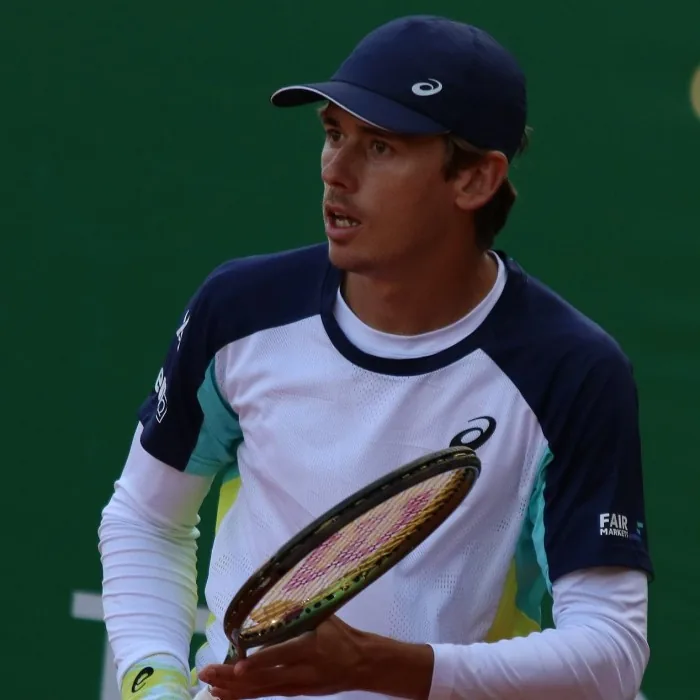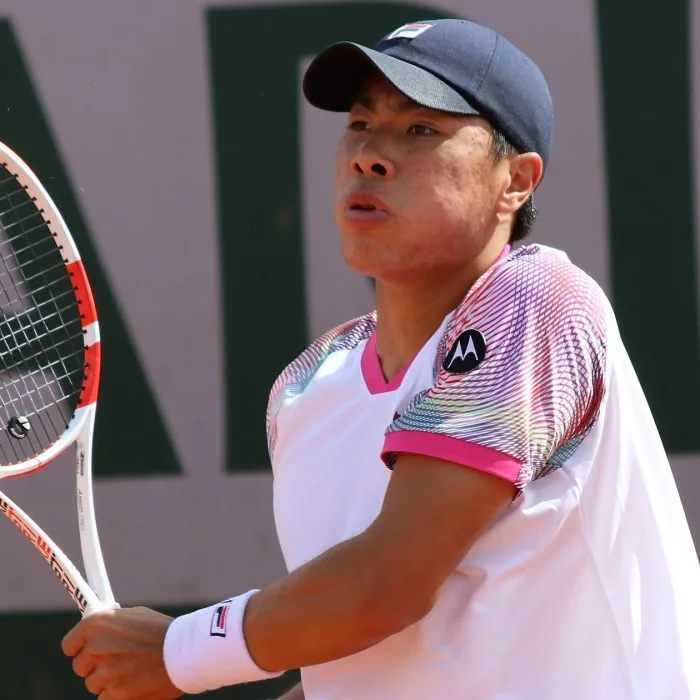







The Clash of Generations: Buse Challenges the Italian Powerhouse
The upcoming encounter between Ignacio Buse and Matteo Berrettini presents a fascinating contrast in styles and career trajectories. While Berrettini is a household name with a Wimbledon final on his resume, the young Peruvian, Ignacio Buse, has recently emerged as a formidable “giant-killer” in team competitions. This match, set against the high-pressure backdrop of the Davis Cup, tests whether youthful energy can overcome veteran experience on an indoor hard court.
Read more Kayla Day vs. Paula Badosa: Tactical Lefty Advantage on Charleston Green Clay
Current form and recent data points highlight several critical factors for this matchup:
- Davis Cup Pedigree: Ignacio Buse proved his mettle earlier this year by defeating Top 20 player Nicolas Jarry in a stunning upset. His ability to elevate his game when representing Peru is a documented trend.
- Berrettini’s Physical Volatility: Although the Italian won three titles in 2024 (Marrakech, Gstaad, and Kitzbuhel), these were all on clay. His transition back to hard courts has been marred by inconsistent fitness and early exits in North American tournaments.
- Surface Dynamics: The indoor hard court in Bologna offers a controlled environment. While this usually favors Berrettini’s massive serve, Buse’s exceptional lateral movement and defensive skills allow him to extend rallies, potentially exposing Berrettini’s lack of match rhythm on this surface.
Why does the analysis lean toward Buse as the favorite? The primary driver is momentum and physical durability. Buse has shown a remarkable capacity to maintain high intensity over three sets, whereas Berrettini has struggled with fatigue and minor injuries during long-drawn-out matches this season. Buse’s strategy will likely revolve around neutralizing the Italian’s serve and forcing him into deep baseline exchanges where the younger player holds a statistical edge in unforced error ratios.
Comparing the two, Berrettini’s weapons are undeniable—his “hammer” forehand and first serve can end points quickly. However, these weapons are less effective if his footwork is compromised by the lingering effects of a long season. Buse, conversely, plays with a “nothing to lose” mentality that has historically troubled Berrettini when facing lower-ranked but highly motivated opponents.
Read more Krueger’s Power vs. McNally’s Variety: Analyzing the Charleston Green Clay Clash
Regarding the current market indicators, the figures show a coefficient of 1.56 for Ignacio Buse, reflecting a calculated probability of success in this specific competitive context. These numbers serve as a secondary indicator of the shifting expectations surrounding the Italian’s current reliability on hard courts.
Several triggers could shift the trajectory of this match. If Berrettini maintains a first-serve percentage above 70% in the opening set, Buse’s defensive strategy will face an uphill battle. Conversely, if the match goes past the two-hour mark, the physical advantage swings heavily toward the Peruvian. The lack of recent head-to-head data adds an element of tactical surprise that Buse is more likely to exploit early on.
Prediction: 2–1 in favor of Ignacio Buse
The reasoning for this scoreline rests on Berrettini’s ability to dominate at least one set through sheer serving power. However, Buse’s superior fitness and recent success in high-stakes national representation should allow him to outlast the Italian in a deciding third set, where Berrettini’s movement often becomes a liability.
Read more Bianca Andreescu vs. Dalma Galfi: Tactical Versatility Meets Baseline Grit in Charleston
Sources: