





Tactical Breakdown: Why Arango Holds the Edge
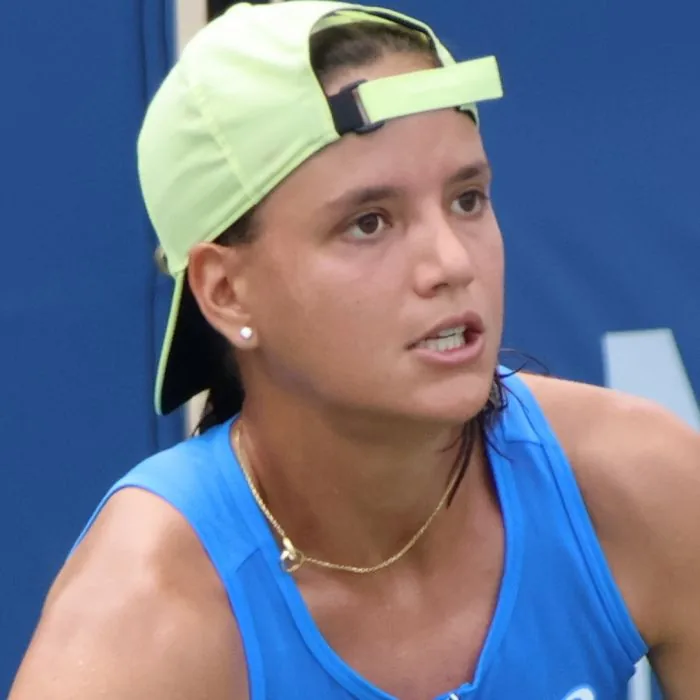
The upcoming encounter between Emiliana Arango and Maria Lourdes Carle brings together two of South America’s most promising clay-court specialists. While both players are deeply familiar with the nuances of slow surfaces, Arango enters this match as the designated favorite. This shift in momentum is largely attributed to her recent evolution in shot selection and her ability to maintain high intensity against top-100 opponents. Arango’s performance at the WTA 1000 level over the past year has demonstrated a ceiling that Carle, despite her consistency, often struggles to reach.
Read more Experience Gap and Altitude Control: Stefan Kozlov Faces Alan Magadan in San Luis Potosi
Arango’s primary advantage lies in her aggressive return of serve and her willingness to dictate points from the baseline. Unlike many defensive clay-courters, the Colombian looks to shorten rallies when the opportunity arises. Statistically, Arango has shown significant improvement in her first-serve win percentage, which now frequently hovers above 65% in her winning efforts. This offensive pressure forces opponents into defensive positions, a tactic that is particularly effective against a counter-puncher like Carle.
The Challenge for Maria Lourdes Carle
Maria Lourdes Carle is far from an easy opponent. Her game is built on relentless movement and tactical variety, often frustrating power hitters by extending rallies until they commit unforced errors. She has maintained a solid win rate on the ITF and WTA 125 circuits, proving her durability. However, Carle’s second serve remains a vulnerability; it often lacks the depth required to prevent an aggressive player like Arango from stepping inside the baseline and taking control of the point immediately.
The physical toll of Carle’s recent schedule also plays a role. Her “grinding” style requires peak physical conditioning, and any slight drop in energy levels allows a player with Arango’s power to dominate the court geometry. While Carle leads the historical head-to-head in lower-tier events, Arango’s recent trajectory in higher-level WTA draws suggests she has adapted better to the pace of modern professional tennis.
Read more Ignacio Buse’s Tactical Resilience vs. Matteo Berrettini’s Power: A Davis Cup Analysis
Market Indicators and Match Context
Current indicators position Emiliana Arango as the favorite with a coefficient of 1.46, implying a calculated probability of approximately 68.5%. These figures reflect the expectation that Arango’s offensive toolkit will outweigh Carle’s defensive resilience in the current conditions.
Key Factors and Potential Triggers
Several elements will determine the final outcome of this match:
- Altitude and Conditions: If the match is played at altitude, the ball will travel faster, significantly benefiting Arango’s flatter groundstrokes over Carle’s heavy topspin.
- First Serve Consistency: Arango’s success is often tied to her first-serve percentage. If she drops below 50%, Carle will find the openings needed to break back.
- Unforced Error Count: The match hinges on whether Arango can remain patient. Carle’s goal is to bait Arango into “over-hitting.”
What remains uncertain is the immediate physical recovery of both players following recent travel. A slow start from either side could see the momentum swing rapidly, especially in a best-of-three set format where the first set often dictates the tactical approach for the remainder of the match.
Prediction: 2–1 in favor of Emiliana Arango
This match is expected to be a tactical battle. While Arango possesses the superior power to dictate play, Carle’s defensive skills are sufficient to force a deciding set. Arango is likely to take the first set through sheer aggression, drop the second as Carle adjusts her depth, and ultimately secure the win in the third set by exploiting Carle’s fatigue and attacking her second serve.
Read more Kayla Day vs. Paula Badosa: Tactical Lefty Advantage on Charleston Green Clay
Sources: