





Match Context and Surface Dynamics
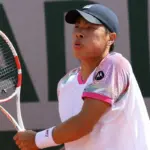
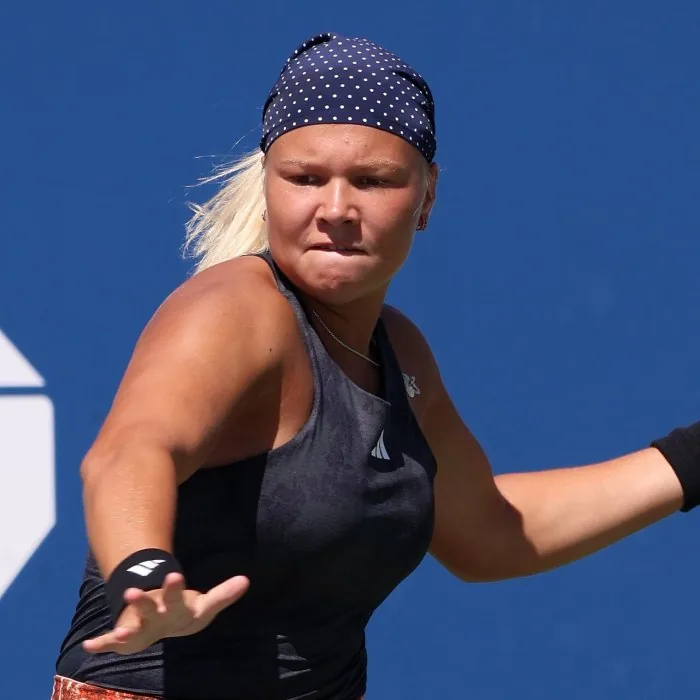
The upcoming clash between Katie Volynets and Diana Shnaider at the WTA Charleston Open presents a fascinating contrast in styles. Played on the unique green clay (Har-Tru) of South Carolina, this tournament rewards players who can balance aggression with sliding defense. Volynets, an American known for her exceptional court coverage, enters this match with the advantage of playing on a surface that perfectly complements her counter-punching style.
Read more Yastremska’s Power vs. Bencic’s Precision: Why Match Rhythm Favors the Ukrainian in Charleston
Why Katie Volynets Holds the Analytical Edge
Despite the competitive nature of the WTA tour, several factors position Volynets as a tactical favorite in this specific environment. First, her performance on Har-Tru has historically been superior to her results on traditional red clay. Her ability to absorb pace and redirect the ball makes her a nightmare for aggressive hitters who struggle with rhythm. In recent months, Volynets has demonstrated a significant improvement in her first-serve percentage, often hovering above 70%, which prevents opponents from attacking her second serve immediately.
Furthermore, Volynets excels in extended rallies. Statistics from her previous North American hard-court and clay swings show that she wins over 55% of points that last longer than nine shots. In Charleston, where the air is humid and the courts can play slightly slower than standard hard courts, her physical conditioning becomes a decisive weapon. She effectively forces her opponents into “one more shot” scenarios, leading to unforced errors from high-risk players.
The Challenge for Diana Shnaider
Diana Shnaider is undoubtedly one of the most dangerous young lefties on the tour. Her heavy forehand and aggressive return game can take the racket out of an opponent’s hand. However, Shnaider’s game is high-variance. On green clay, the bounce can be unpredictable, which often disrupts the timing of players who rely on clean ball-striking. While Shnaider has the power to dominate, her defensive movement on clay remains a step behind her hard-court prowess. If she cannot find the lines early in the match, she risks being drawn into a physical battle that favors the steadier American.
Read more Arango vs. Carle: Aggressive Baseline Strategy Meets Clay-Court Endurance
Market Indicators
Current market data reflects a split perspective, with Katie Volynets carrying odds of 2.7 and Diana Shnaider at 1.42. While the probabilities are currently listed at 0.0% due to the early nature of the event cycle, these figures suggest that the market anticipates a closely contested match where the underdog has a significant path to victory through tactical consistency.
Key Triggers and Uncertainties
Several factors could shift the momentum of this match:
- Wind Conditions: Charleston is known for coastal breezes. High winds typically favor Volynets, as Shnaider’s high-risk shots require precise timing.
- First Set Momentum: Shnaider is a front-runner; if she wins the first set, her confidence grows exponentially. Conversely, Volynets is a specialist in three-set comebacks.
- Physical Fatigue: If either player is coming off a deep run in a previous tournament, the grinding nature of green clay will expose any lingering exhaustion.
Score Prediction: 2–1 in favor of Katie Volynets
This match is likely to follow a pattern where Shnaider uses her raw power to claim a set, likely the first. However, Volynets’ superior fitness and ability to adjust her court positioning will allow her to outlast the Russian in the later stages. Expect Volynets to win by wearing Shnaider down, securing the deciding set as the error count rises for the aggressive lefty. A 2-1 victory reflects Volynets’ resilience and her specific suitability for the Charleston conditions.
Read more Experience Gap and Altitude Control: Stefan Kozlov Faces Alan Magadan in San Luis Potosi
Sources: