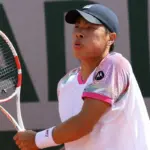







Tactical Breakdown: Why Brooksby Holds the Upper Hand in Houston
The ATP Houston tournament, known for its unique U.S. Maroon Clay, presents a fascinating stylistic clash between two Americans with contrasting approaches. Jenson Brooksby enters this matchup as the clear frontrunner, primarily due to a playing style that thrives on the very conditions Houston provides. Unlike the slick European red clay, the Houston surface is slightly faster but still rewards the kind of defensive grinding and “junk balling” that Brooksby has mastered.
Read more Federico Cina vs. Alexandre Muller: Youthful Momentum Meets Clay-Court Experience in Marrakech
Why does Brooksby pose such a problem for Mackenzie McDonald? The answer lies in rhythm disruption. McDonald is a classic rhythm player who excels when he can use his opponent’s pace to redirect shots. Brooksby, however, refuses to provide that pace. By utilizing short angles, deep slices, and unorthodox backhand volleys, Brooksby forces McDonald to generate his own power—a task that becomes significantly harder on a clay surface where the ball sits up and loses momentum.
Key Analytical Factors:
- Head-to-Head Dominance: Brooksby has historically controlled this matchup, leading their professional series 2-0. His ability to neutralize McDonald’s flat groundstrokes has been the deciding factor in their previous encounters.
- Surface Adaptability: While both players grew up on hard courts, Brooksby’s defensive coverage is statistically superior. His win rate in rallies exceeding nine shots is significantly higher than McDonald’s, which is a critical metric for success on clay.
- Return Game: Brooksby’s return of serve remains one of the most underrated in the mid-tier ATP circuit. He consistently puts pressure on second serves, forcing opponents into uncomfortable serve-and-volley situations or long baseline exchanges.
Mackenzie McDonald is far from a pushover. His footwork is among the fastest on tour, and his ability to transition from defense to offense can catch Brooksby off guard if the latter plays too passively. However, McDonald’s primary weakness remains his lack of a “knockout” punch. On clay, his flat shots often land in the hitting zone of a player as flexible as Brooksby, making it difficult for Mackenzie to find the lines consistently over three sets.
Current market indicators reflect this disparity, with Brooksby positioned at a 1.42 probability (66.9%) compared to McDonald’s 2.75 (33.1%). These figures underscore the general consensus that Brooksby’s tactical variety is better suited for the opening rounds of a clay-court event.
Read more Experience Meets Youth: Bellucci Set to Test Bennani’s Clay Court Resilience in Marrakech
What could shift the momentum? Watch the first-serve percentage in the opening four games. If McDonald can maintain a high percentage of unreturned serves, he might prevent Brooksby from settling into a defensive rhythm. Additionally, the humidity in Houston can make the balls heavy; if the conditions become exceptionally slow, the physical toll will favor the younger, more resilient Brooksby.
Score Prediction: 2–0 in favor of Jenson Brooksby
Brooksby is expected to take this in straight sets. While McDonald has the speed to keep rallies alive, he lacks the heavy topspin required to push Brooksby behind the baseline. Expect a tight first set followed by a more dominant second set as Brooksby’s defensive pressure wears down McDonald’s patience, leading to a rise in unforced errors from the underdog.
Read more Jesper de Jong vs. Yannick Hanfmann: Can Youthful Agility Overcome Veteran Power in Marrakech?
Sources: