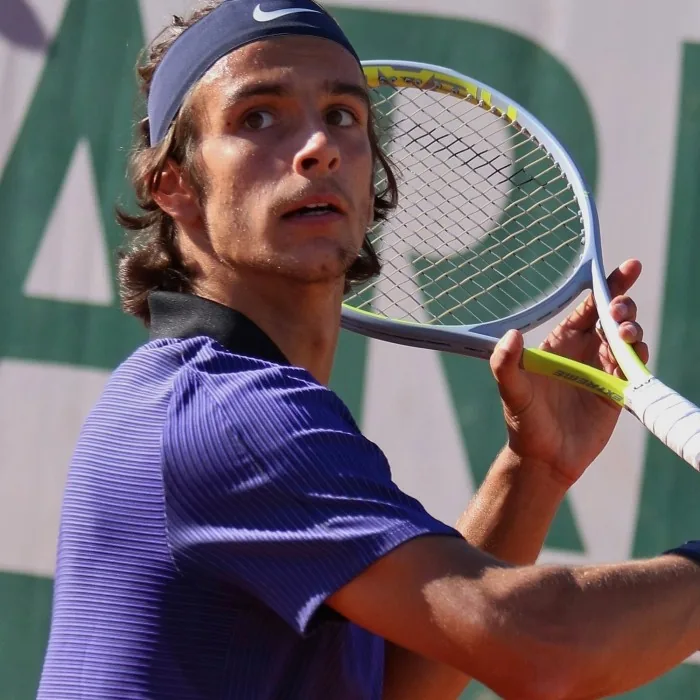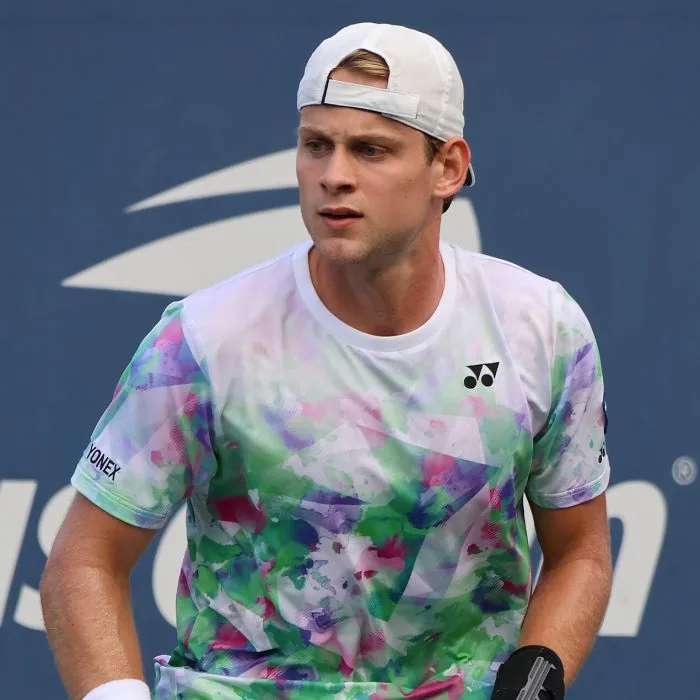






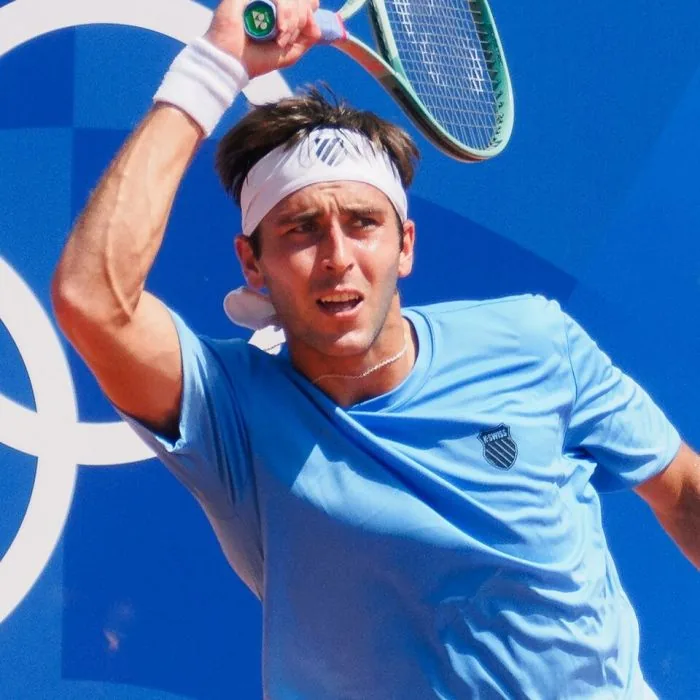
Head-to-Head
Tomas Martin Etcheverry and Grigor Dimitrov have a limited but telling history. Their most notable encounter took place at the Paris Masters in late 2024, where Dimitrov secured a hard-fought victory in three sets (6-7, 6-3, 7-5). That match demonstrated that while Dimitrov possesses the higher ceiling in terms of shot-making, Etcheverry has the physical resilience to push the Bulgarian to his absolute limits.
Read more Stephens’ Athleticism vs. Maria’s Variety: Analyzing the Linz Indoor Clash
This upcoming clash in Monte-Carlo marks their first meeting on red clay. The shift in surface fundamentally alters the dynamic of their rivalry. On hard courts, Dimitrov’s slice and aggressive positioning allow him to dictate play, but the slow, high-bouncing conditions of the Rainier III court play directly into the hands of the Argentine specialist. The historical data suggests a razor-thin margin, yet the tactical advantage shifts toward the dirt-baller from La Plata when the rallies extend beyond ten shots.
Form Guide
Tomas Martin Etcheverry enters this tournament as a seasoned threat on clay. His recent performances during the Golden Swing in South America and the early European clay season highlight his consistency; he has secured wins against several top-30 opponents by relying on his heavy topspin forehand. Etcheverry’s ability to defend deep behind the baseline and transition into offense makes him a grueling opponent in a best-of-three format on slow surfaces.
Grigor Dimitrov, conversely, has enjoyed a remarkable late-career resurgence, highlighted by his final appearance in Miami and a title in Brisbane earlier in the season. However, his transition to clay has historically been his most challenging period of the year. While he reached the semifinals in Monte-Carlo back in 2022, his recent form on the dirt has been more volatile compared to his clinical efficiency on hard courts. Dimitrov’s game relies on timing and precision, both of which are harder to maintain when the clay dampens his power and rewards defensive grinding.
Key Factors
The primary tactical battle revolves around Etcheverry’s heavy topspin forehand directed at Dimitrov’s one-handed backhand. On a high-bouncing clay court, this is a classic mismatch. Etcheverry can generate significant RPMs that force Dimitrov to strike the ball above shoulder height—a difficult task for any one-handed backhand player to execute consistently over two or three hours. If Etcheverry successfully pins Dimitrov in the backhand corner, the Bulgarian will be forced to rely on his slice, which is far less penetrating on slow clay than on grass or hard courts.
Read more Fonseca vs Diallo: Brazilian Prodigy Seeks Redemption on the Indoor Hard Courts
Physicality and court conditions will also play a decisive role. Monte-Carlo is notorious for its heavy air and slow courts, especially if there is any moisture. These conditions favor Etcheverry’s superior stamina and his willingness to engage in long, attritional rallies. For Dimitrov to win, he must shorten the points and find success at the net, but Etcheverry’s passing shots on clay are among the most reliable on tour. A key trigger to watch will be the first-serve percentage; if Etcheverry lands over 65% of his first serves, Dimitrov will struggle to find the break-point opportunities needed to swing the momentum.
Our Verdict
The match is expected to be a grueling baseline battle where Etcheverry’s natural affinity for the surface gives him the edge. While Dimitrov is the more decorated player and holds a higher overall ranking, the specific conditions in Monte-Carlo neutralize his greatest weapons—his low slice and his quick-strike offense. Etcheverry’s 1.69 probability reflects his status as the specialist in this environment, and his recent results on clay suggest he is ready to claim a significant scalp.
Expect a high-intensity match where Dimitrov may steal a set through sheer brilliance, but Etcheverry’s physical conditioning and topspin-heavy game should prevail in the long run. The most likely outcome is a three-set victory for the Argentine, as he wears down Dimitrov’s backhand wing and dominates the longer exchanges. We predict a 2-1 victory for Tomas Martin Etcheverry, with the final set highlighting the physical gap between a clay specialist and an all-court veteran on this specific terrain.
Read more Zizou Bergs Poised to Dominate Adrian Mannarino on the Monte-Carlo Clay
Sources: