





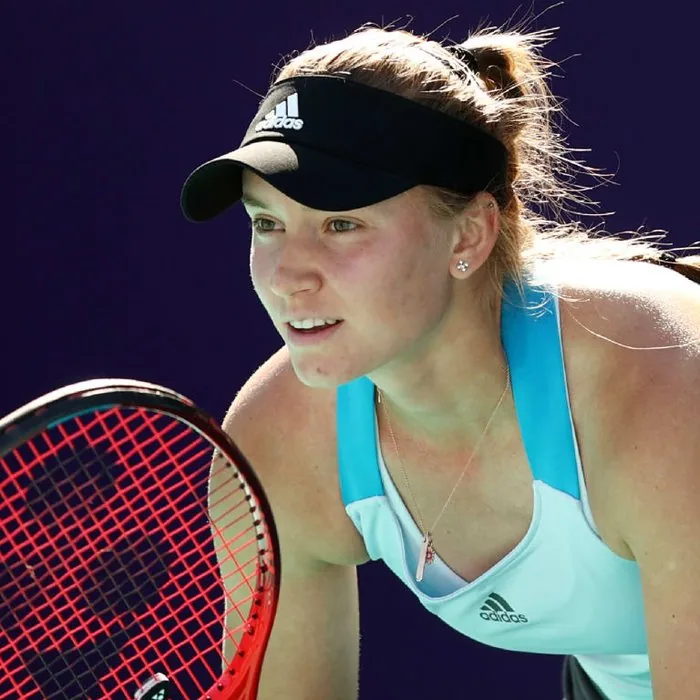
The Clash of Experience and Youth in Melbourne
The opening round of the Australian Open brings a fascinating contrast in styles and career trajectories as world number 4 Elena Rybakina faces the rising Australian talent Talia Gibson. Rybakina, the 2023 finalist in Melbourne, enters the tournament under a spotlight, not just for her formidable game but for her recent coaching change to Goran Ivanisevic and a period of relative inactivity due to health concerns. On the other side of the net, Gibson represents the next wave of Australian tennis, having surged up the rankings through consistent performances on the ITF circuit.
Read more Pegula’s Clinical Dominance Meets Cristian’s Clay Defenses: Analyzing the Under 19.5 Projection
Why does the statistical advantage lean so heavily toward Rybakina? The answer lies in her serve and baseline aggression. In the 2024 season, Rybakina remained a leader in ace counts and first-serve points won, a critical metric on the fast hard courts of Melbourne Park. Her ability to dictate play from the first strike often leaves opponents with little room to breathe. Furthermore, Rybakina’s record against players ranked outside the top 100 is exceptionally strong; she rarely drops sets in the early rounds of Grand Slams, focusing on efficiency to preserve energy for the second week.
Talia Gibson, however, is not a competitor to be overlooked entirely. The 20-year-old Australian reached a career-high ranking inside the top 130 late in 2024, fueled by three ITF titles and a semi-final run in a WTA 125 event. She will have the vocal support of the home crowd, which can often unsettle higher-ranked seeds in the early stages of the tournament. Gibson’s game is built on mobility and counter-punching, but the primary challenge remains: can she handle the sheer velocity of Rybakina’s groundstrokes? Most players at the ITF level simply do not produce the 120+ mph serves that Rybakina delivers consistently.
Current indicators reflect this disparity, with Rybakina positioned as a massive favorite at 1.13, implying a win probability of approximately 88%. These figures underscore the gap in top-level experience between a former Wimbledon champion and a player making her strides toward the main WTA tour.
Read more Anisimova’s Power vs. Bencic’s Tactical Return: Miami Open Analysis
What could shift this narrative? The primary uncertainty is Rybakina’s match fitness. Having withdrawn from several tournaments in late 2024, any sign of physical rust or a high unforced error count in the opening games could give Gibson an opening. If the Australian can extend rallies and force Rybakina into long, physical exchanges under the Melbourne heat, the dynamic of the match could tighten. However, if Rybakina’s serve is clicking, the tactical options for Gibson become extremely limited.
Key Factors for the Match:
- First Serve Percentage: If Rybakina lands over 60% of her first serves, Gibson will struggle to find break point opportunities.
- Court Speed: The Plexicushion surface rewards Rybakina’s flat hitting, making it harder for Gibson to defend.
- Atmosphere: How Rybakina handles the pro-Australian crowd after a long break from competitive play.
Prediction: 2–0 in favor of Elena Rybakina
Expect a professional performance from the Kazakhstani star. While Gibson may keep things competitive in the early games of each set through gritty defending, Rybakina’s weight of shot should eventually break through. A scoreline such as 6-3, 6-2 is likely, as Rybakina will look to minimize time on court and avoid any physical complications in the opening round.
Read more Corentin Moutet vs Jannik Sinner: Why Tactical Chaos Could Define the Miami Open Clash
Sources: