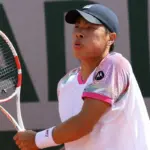







Head-to-Head
The historical matchup between Arthur Rinderknech and Karen Khachanov stands at a balanced 1–1, reflecting a clash of styles that often produces tight scorelines. Their first encounter took place on the clay courts of Lyon in 2021, where Khachanov secured a hard-fought victory in three sets. However, Rinderknech leveled the series in 2022 on the hard courts of Adelaide, winning in straight sets (6-4, 7-5). This dynamic suggests that while Khachanov has the traditional clay-court pedigree, Rinderknech has found the tactical blueprint to neutralize the world number 17’s power.
Read more Rublev’s Power Meets Borges’ Resilience in Monte Carlo Opener
The evolution of this rivalry shows that Rinderknech is no longer intimidated by Khachanov’s heavy baseline game. In their previous meetings, the Frenchman successfully utilized his height and kick serve to pull Khachanov out of his comfort zone. The transition to the slow clay of Monte Carlo adds a new layer to this rivalry, as both players have spent the last few seasons refining their movement on the dirt, making this third encounter a definitive tie-breaker for their head-to-head record.
Form Guide
Arthur Rinderknech enters this tournament showing significant resilience, having won four of his last five matches. His recent success has been defined by a high first-serve percentage and an improved ability to defend in long rallies. Unlike many “big servers,” Rinderknech has developed a patient approach to clay, often using his slice to disrupt the rhythm of heavy hitters. His recent performances in ATP 250 events have demonstrated a peak in physical conditioning, which is crucial for the grueling conditions in Monaco.
Karen Khachanov, conversely, has had a mixed run of form. While he remains a formidable opponent, his last five matches have seen him struggle with consistency, particularly in closing out sets. Recent losses to lower-ranked opponents highlight a vulnerability to players who apply constant pressure at the net. Khachanov’s game relies heavily on his forehand, but when that wing misfires under pressure, he lacks a “Plan B,” which has led to early exits in recent Masters 1000 events.
Key Factors
The primary factor favoring Rinderknech is the specific nature of the Monte Carlo surface. While it is slow, the high bounce allows Rinderknech’s kick serve to be exceptionally effective, often forcing returns to be played from well behind the baseline. Rinderknech’s willingness to come to the net—a rarity on clay—can exploit Khachanov’s tendency to sit deep in the court. If the Frenchman can maintain a first-serve percentage above 65%, he will dictate the points and prevent Khachanov from establishing his preferred baseline rhythm.
Read more Jakub Mensik vs Fabian Marozsan: Power Dynamics on the Monte-Carlo Clay
Motivation and “home” advantage also play a role. Living and training in the region, Rinderknech treats Monte Carlo as a home tournament. The local support often provides a psychological edge during critical deuce points. For Khachanov, the challenge will be his lateral movement; if Rinderknech uses the drop shot effectively, he can expose Khachanov’s slower recovery times on heavy clay. A key trigger to watch will be the length of the first set; if Rinderknech wins it, Khachanov’s recent history suggests a drop in intensity that the Frenchman is well-equipped to exploit.
Our Verdict
Despite the gap in world rankings, Arthur Rinderknech is the analytical favorite for this specific matchup. His recent victory over Khachanov proved he can handle the pace, and his current momentum far outweighs Khachanov’s stagnant form. Rinderknech’s ability to serve his way out of trouble and his tactical variety on clay give him the upper hand against a more one-dimensional opponent. While Khachanov possesses a powerful baseline game, it often lacks the nuance required to break down a confident and aggressive server like Rinderknech on the slow courts of Monaco.
Expect a highly competitive match where Rinderknech’s aggression at the net and superior serve placement will be the deciding factors. Khachanov may find success in the longer rallies, but Rinderknech’s ability to shorten points will keep the pressure firmly on the higher-seeded player. We anticipate a victory for the Frenchman in three sets, capitalizing on a late break of serve in the decider. The odds of 2.85 represent significant value for a player who has already proven he can beat this opponent in straight sets.
Read more Langmo’s Power Game vs. Rodriguez’s Experience: Analyzing the Sarasota Challenger Clash
Final Score Prediction: Arthur Rinderknech wins 2–1 (6-4, 3-6, 7-5).
Sources: