





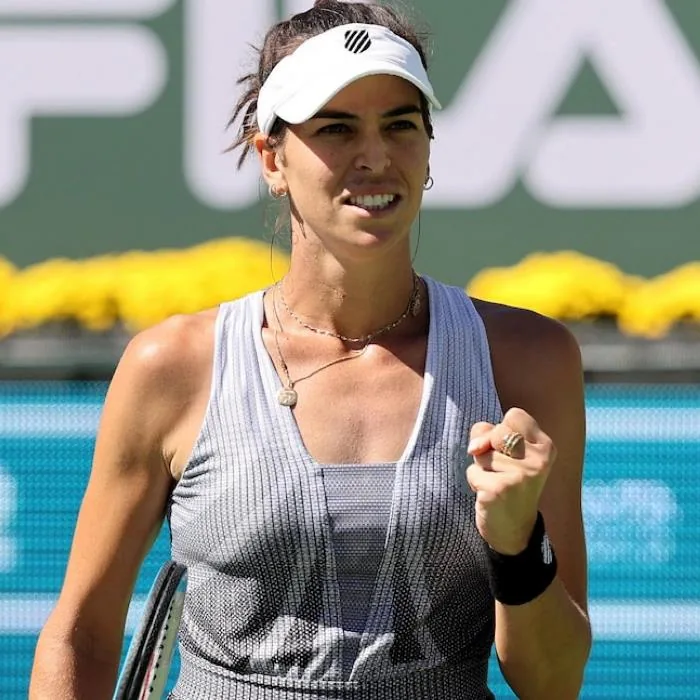
Surface Dynamics and Tactical Matchup
The upcoming clash between Ajla Tomljanovic and Donna Vekic at the Charleston Open presents a fascinating contrast in styles, specifically tailored to the unique Har-Tru green clay of South Carolina. Unlike the traditional red clay found in Europe, this surface plays faster and rewards players who can maintain a flat, aggressive trajectory on their groundstrokes. This environment sets the stage for a high-intensity baseline battle where rhythm and lateral movement will dictate the outcome.
Read more Jack Pinnington Jones vs. Zhizhen Zhang: Youthful Momentum Meets Power in Houston
Ajla Tomljanovic enters this matchup as the designated favorite, a position supported by her historical resilience in North American conditions. While her career has been punctuated by injury breaks, her ability to peak during the US swing is well-documented. Tomljanovic’s primary strength lies in her backhand down the line and her improved first-serve percentage, which allows her to neutralize aggressive returners. On green clay, her flatter shots don’t sit up as much as they would on red clay, making it harder for opponents to dictate play.
Key Analytical Factors:
- Surface Specialization: Charleston’s green clay is a hybrid that bridges the gap between hard courts and clay. Tomljanovic’s movement patterns are better suited for this “sliding hard court” style than Vekic’s more traditional hard-court footwork.
- Head-to-Head Context: Although Donna Vekic has historically held an advantage in their series, many of those matches occurred on faster grass or indoor surfaces. In a grinding outdoor environment, the physical edge often shifts toward Tomljanovic.
- Recent Form: Tomljanovic has shown a trend of deep runs in WTA 500 events when healthy, focusing on high-percentage tennis rather than high-risk winners.
The Challenge for Donna Vekic
Donna Vekic remains a formidable threat due to her superior raw power and a more potent first serve. When her timing is on, she can blow opponents off the court. However, her game often struggles with consistency on slower surfaces where the ball requires more generation of pace. The main argument against Vekic here is her tendency to rack up unforced errors when forced into extended rallies—a scenario that is almost guaranteed on the Charleston dirt. While she can dominate short points, the defensive capabilities of Tomljanovic often force Vekic into “over-hitting,” leading to crucial breaks of serve.
Current market indicators show Tomljanovic with a coefficient of 1.92 (implied probability of approximately 52%), while Vekic stands at 1.82. These figures suggest an incredibly tight contest where the margin for error is razor-thin, reflecting the competitive nature of their previous encounters.
Read more Zhukayev’s Power vs. Catry’s Resilience: Analyzing the San Luis Potosi Clash
Strategic Outlook and Triggers
What remains uncertain is the humidity level on match day, which can significantly affect the weight of the balls and the speed of the court. A heavier atmosphere would further favor Tomljanovic’s endurance-based game. Watch for the early break points in the first set; if Tomljanovic can extend the games beyond five or six deuces, Vekic’s frustration levels often become a deciding factor.
Triggers to watch:
- Vekic’s first-serve percentage: If it drops below 55%, Tomljanovic will likely dominate the second-serve returns.
- Tomljanovic’s movement: Any signs of physical fatigue early in the second set could swing the momentum back to the Croatian.
Score Prediction: 2–1 in favor of Ajla Tomljanovic
This match is likely to go the distance. Vekic has the firepower to claim a set, likely the first, through sheer aggression. However, Tomljanovic’s superior point construction and physical conditioning on clay should allow her to outlast Vekic in a deciding third set, winning 4-6, 6-4, 6-3.
Read more Tirante’s Clay-Court Pedigree Faces Smith’s Collegiate Momentum in Houston
Sources: