





Tactical Breakdown: The Battle of Clay Specialists
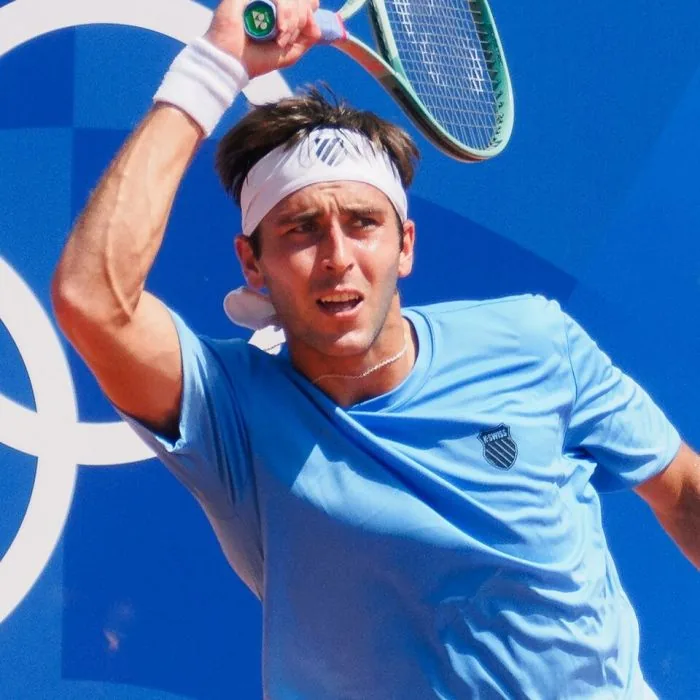
As the ATP circuit shifts to the iconic red clay of Monte Carlo, the opening round presents a fascinating stylistic clash between Juan Manuel Cerundolo and Pedro Martinez. Both players are quintessential “clay-court rats,” comfortable in long rallies and tactical maneuvering. However, the current trajectory favors the younger Argentine, whose game is specifically engineered for the slow, heavy conditions found in Monaco.
Read more Moise Kouame vs Ugo Humbert: Clay Court Dynamics Favor the Rising Star in Monte-Carlo
What defines this matchup? First, look at the surface proficiency. Juan Manuel Cerundolo has built his entire career around clay, with over 90% of his professional matches occurring on this surface. His ability to use his left-handed forehand to pull opponents off the court is a nightmare on slow dirt. Pedro Martinez, while also a clay specialist with an ATP title in Santiago, has shown more volatility in his recent performances, often struggling to maintain intensity in three-set matches against younger, high-energy grinders.
Key Facts for the Analysis:
- Surface Dominance: Cerundolo maintains a career win rate on clay that significantly exceeds his performance on any other surface, often thriving in high-humidity environments similar to Monte Carlo.
- Head-to-Head History: Their previous encounters have been grueling affairs, often decided by a handful of points in deciding sets, proving that neither man gives away free points.
- Recent Form: Cerundolo has recently tightened his defensive game, reducing unforced errors in extended rallies of 10+ shots, a metric where he currently leads Martinez.
Why Cerundolo Holds the Edge
The Argentine is the favorite primarily due to his defensive resilience and the “lefty factor.” In Monte Carlo, where the courts play slower than in Madrid or Rome, the ability to retrieve one extra ball is paramount. Cerundolo excels at turning defense into offense with his heavy topspin. Statistics show that Martinez tends to struggle against left-handed players who can target his backhand with high-bouncing cross-court shots, forcing the Spaniard into defensive positions he dislikes.
Why might Martinez falter? While the Spaniard possesses a more versatile game, including a sharp drop shot and better net play, his consistency often wavers during the second hour of play. If Cerundolo can turn this into a physical battle of attrition, the younger legs of the Argentine are likely to prevail. Martinez’s second serve remains a liability that Cerundolo is well-equipped to exploit, especially on a surface that rewards aggressive returning.
Read more Fucsovics vs. Tabilo: Why Tactical Superiority Favors the Hungarian in Monte-Carlo
Market Indicators
Current expectations place Cerundolo as the frontrunner with a coefficient of 1.65, reflecting a calculated probability of success. Martinez follows as the underdog at 2.15. These figures suggest a competitive match but clearly lean toward the Argentine’s superior clay-court consistency in the current season.
Factors That Could Shift the Outcome
Despite the lean toward Cerundolo, two main triggers could flip the script. First is the weather; if the conditions are unusually dry and fast, Martinez’s flatter groundstrokes and variety become much more dangerous. Second is the physical state of Cerundolo; his high-intensity style demands peak fitness. Any sign of fatigue from previous qualifying rounds could give the experienced Spaniard the opening he needs to dictate play.
Match Prediction: 2–1 in favor of Cerundolo, Juan Manuel
Expect a marathon. Both players are likely to trade sets as they feel out each other’s rhythm. Martinez has the tactical IQ to steal a set through variety and net approaches, but Cerundolo’s relentless baseline pressure should eventually wear the Spaniard down in a deciding third set. The slow Monte Carlo clay rewards the Argentine’s patience and superior movement in the long run.
Read more Norrie’s Tactical Resilience vs. Kecmanovic’s Aggression: Analyzing the Monte Carlo Opener
Sources: