
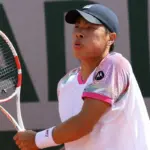







Tactical Breakdown: Clay Specialist vs. Hard-Court Power
The San Luis Potosi Challenger presents a classic stylistic clash on the red clay of Mexico. Facundo Mena, a seasoned campaigner from Argentina, enters this match with a distinct advantage rooted in his upbringing on this surface. Unlike many modern players who split their time across all terrains, Mena’s game is built specifically for the dirt, characterized by heavy topspin and the patience to outlast opponents in grueling rallies.
Read more Facundo Diaz Acosta’s Clay Court Pedigree vs. Connor Huertas Del Pino’s Singles Transition
Tristan Schoolkate, representing Australia, brings a different set of tools. His game is predicated on a powerful serve and aggressive net approaches—tactics that typically flourish on faster hard courts or grass. While Schoolkate has shown significant improvement in his baseline consistency over the last year, the transition to the slow, high-altitude conditions of San Luis Potosi remains a significant hurdle for his flat-hitting style.
Key Factors and Surface Dynamics
Several critical elements tilt the scales in favor of the Argentine:
- Surface Specialization: Mena has spent the vast majority of his professional career on clay, winning multiple Challenger titles on the surface. His movement and sliding ability are naturally superior to Schoolkate’s.
- Altitude Management: San Luis Potosi sits at approximately 1,800 meters above sea level. In these conditions, the ball flies faster through the air but bounces high off the clay. Mena’s experience in South American high-altitude tournaments (such as Bogota or Quito) gives him a tactical edge in controlling the ball’s depth.
- Head-to-Head History: Mena previously defeated Schoolkate in their only recorded meeting. Notably, that victory occurred on a hard court, which is theoretically Schoolkate’s preferred surface, suggesting Mena has the defensive tools to neutralize the Australian’s power.
Current indicators place Mena as the favorite with a 1.66 coefficient (56.3% probability), while Schoolkate stands at 2.09 (43.7%). These figures reflect the surface advantage held by the Argentine and his historical reliability in Latin American clay-court swings.
The Case for Schoolkate
What could change the narrative? Schoolkate’s primary weapon is his serve. If the thin air in Mexico allows him to rack up a high percentage of free points, he can keep the sets close and pressure Mena in tiebreaks. However, the Australian often struggles when forced into extended exchanges, where Mena’s superior point construction usually prevails. Schoolkate’s lack of variety in his sliding technique often leaves him out of position against heavy cross-court angles.
Read more Callejon Hernando vs. Paulson: Clay Court Specialization Meets Challenger Experience
Strategic Uncertainties
The primary uncertainty lies in the physical condition of both players. If Mena has faced long three-set matches earlier in the week, fatigue could blunt his defensive edge. Conversely, a “hot” serving day from Schoolkate could bypass the tactical nuances of the clay surface entirely. Watch for the first four games: if Schoolkate is unable to find cheap points on his first serve, it will be a long evening for the Australian.
Prediction: 2–0 in favor of Facundo Mena
Mena is expected to win in straight sets. His ability to use the altitude to kick his serve high to Schoolkate’s backhand should create immediate defensive openings. While Schoolkate may keep the score competitive in the first set, the physical demand of clay-court tennis favors the specialist, likely leading to a more decisive second set as the Australian’s error count rises.
Read more Daniel Merida vs. Adrian Mannarino: Can the Spanish Qualifier Exploit Mannarino’s Recent Slump?
Sources: