





Surface Specialization vs. All-Court Versatility
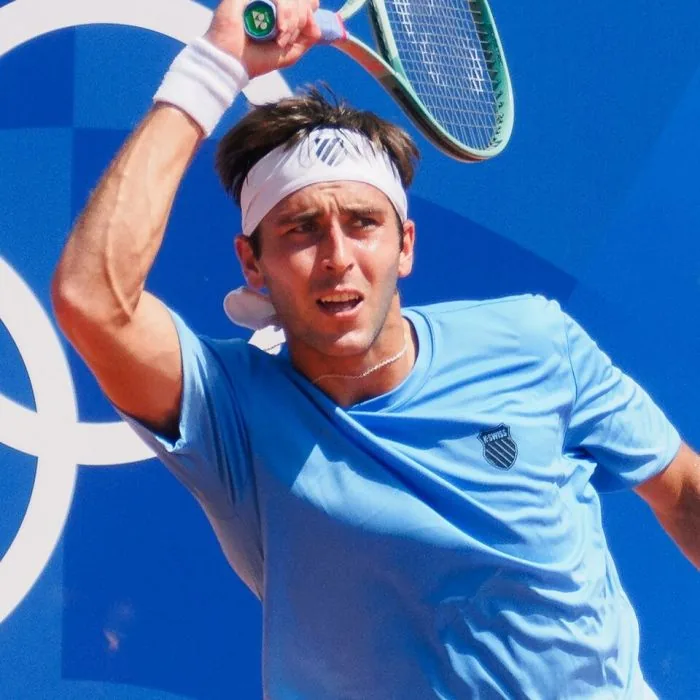
The upcoming clash in Marrakech brings together two players with contrasting styles and surface preferences. Marco Trungelliti, a seasoned veteran of the red dirt, faces Kamil Majchrzak in a match where tactical patience will likely outweigh raw power. While the rankings might suggest a close contest, the specific conditions of the Moroccan clay provide a distinct backdrop that favors the specialist over the generalist.
Read more Kessler’s Power Advantage Faces Tjen’s Defensive Resilience in Charleston
Marco Trungelliti enters this match as a formidable opponent due to his deep-rooted comfort on clay. Historically, the Argentine has found his best form on this surface, utilizing a heavy topspin forehand and exceptional lateral movement to grind down opponents. His ability to navigate the long rallies typical of Marrakech is a significant advantage. In contrast, Kamil Majchrzak often prefers faster conditions where his flat groundstrokes and serve can dictate play more effectively. On the slow, high-bouncing clay of North Africa, those flat strikes often lose their penetration, allowing a defender like Trungelliti to reset the point.
Key Factors for the Match:
- Surface Proficiency: Trungelliti has spent the vast majority of his career on clay, developing the “clay-court IQ” necessary to slide into shots and use drop shots effectively.
- Physical Endurance: Marrakech often features grueling matches under the sun. Trungelliti’s fitness in extended three-set battles on dirt is well-documented.
- Tactical Matchup: Majchrzak leads their head-to-head on hard courts, but the transition to clay shifts the dynamic. The Pole’s tendency to play closer to the baseline can be exploited by Trungelliti’s high-looping defensive shots.
Why is Trungelliti positioned as the one to watch? It comes down to his recent consistency in clay-court Challengers and ATP qualifying rounds. He rarely beats himself, forcing his opponents to hit through him—a difficult task on a surface that rewards patience. While Majchrzak possesses a more powerful serve, its impact is neutralized by the dampening effect of the clay, forcing him into a baseline war that plays directly into the Argentine’s hands.
Majchrzak does bring a high level of resilience and a cleaner backhand to the court. If he can find a way to shorten the points and come to the net, he could disrupt Trungelliti’s rhythm. However, his lack of variety compared to the Argentine specialist makes this a steep uphill climb in a best-of-three format on this specific terrain.
Read more Marie Bouzkova vs. Ana Sofia Sanchez: Defensive Precision Meets High-Altitude Clay in Bogota
Current market indicators show Trungelliti with a coefficient of 2.8, while Majchrzak stands at 1.4, reflecting an implied probability of 35.7% and 71.4% respectively. These figures serve as a secondary indicator of the perceived gap in current form, though they often undervalue the “specialist” factor in clay-court tennis.
The primary uncertainty remains the weather conditions; a faster, drier court would aid Majchrzak’s aggressive style, while any moisture or cooler temperatures will further cement Trungelliti’s defensive edge. Watch for the first-serve percentage of the Pole; if it dips below 60%, the Argentine will likely dominate the return games.
Прогноз: 2–1 в пользу Trungelliti, Marco
Expect a tactical battle where Majchrzak’s quality allows him to snatch a set, likely the first, through sheer aggression. However, as the match progresses, Trungelliti’s superior clay-court movement and ability to extend rallies should see him wear down the Pole, eventually securing the win in a deciding set.
Read more Volynets vs. Shnaider: Tactical Discipline Meets Raw Power on Charleston Green Clay
Sources: